
Vastu Shastra Compliance in Sobha World City’s G+54 Floor Towers
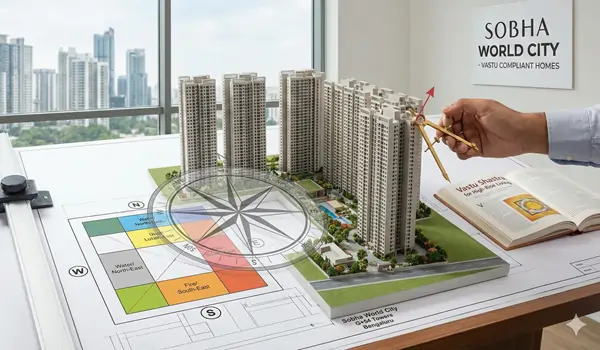
Many homebuyers today have one important question. Can a tall, modern tower truly follow Vastu Shastra? People want luxury and comfort. But they also want a home that respects traditional principles. This concern becomes stronger when the building rises to 54 floors.
At Sobha World City, Vastu compliance is not treated as a small feature. It is part of the main design approach. The project includes 18 high-rise towers within a large 48-acre integrated township. This wide layout plays a key role in making Vastu planning possible, even at great heights.
A common worry among buyers is that high-rise buildings may block sunlight, restrict airflow, or disturb natural energy flow. In crowded developments, this can happen. But here, the large land parcel allows proper spacing between towers. It helps maximize natural light and cross ventilation. It also supports alignment with the cardinal directions, an important aspect of Vastu Shastra.
The 18 towers are positioned carefully to balance built structures with open green spaces. The orientation of the buildings helps bring in morning sunlight and steady airflow. It shows that vertical growth need not ignore traditional wisdom. Instead, with proper planning and enough space, modern engineering and Vastu principles can work together.
In this blog, we will take a closer look at how Vastu Shastra compliance is applied in the G+54 floor towers. We will also explain how the 48-acre master layout supports natural light, ventilation, and balanced living for residents.
What Is Vastu Shastra?
Vastu Shastra is a profound ancient Indian science of architecture. It focuses on how energy flows inside a space. This energy is often called “Prana.”
Vastu is based on:
- The five elements: Earth, Water, Fire, Air, and Space
- The eight directions
- The balance between built space and open space
It is believed that a positive, healthy environment can be created in homes when a building follows Vastu principles.
In Sobha World City, Vastu is not added at the last stage. It is part of the main design. The towers and the township layout reflect this planning from the start.
Can a G+54 Tower Be Vastu-Compliant?
Many buyers ask this question. They worry that tall buildings may disturb energy flow. They also wonder if height affects Vastu. The answer lies in planning.
Sobha World City spans 48 acres. This large area provides sufficient open space between the towers. Because of this:
- Towers are not placed too close to each other
- There is no heavy shadow blocking sunlight
- Air can move freely across the site
The 18 towers are aligned with the cardinal directions. This follows the Vastu Purusha Mandala concept. Open green spaces help balance the heavy structures.
Even though the towers reach 54 floors, each level is planned to receive light and air. The height does not break Vastu rules when the base layout is correct.
Smart Tower Placement Across 48 Acres
The size of the township plays a big role in Vastu compliance. In smaller projects, it is hard to follow every principle. Space is limited. Towers are close together. Sunlight and airflow are often blocked. Here, the 48-acre layout allows better planning.
Some key advantages include:
- Proper distance between the 18 high-rise towers
- Clear movement paths for wind
- Open areas that balance built areas
- Green zones that reduce heat
This wide layout supports both modern engineering and traditional design values.
Maximizing Natural Light
Sunlight is very important in Vastu. The morning sun from the East is considered pure and healthy. It brings positive energy.
In Sobha World City, tower orientation helps maximize sunlight.
Sunlight Benefits in the Towers
- Large windows allow more daylight inside
- Balconies are positioned to receive morning sun
- Towers are spaced to prevent blocking each other
This design allows many homes to enjoy bright and lively mornings.
Managing the West Sun
Even if the East sun is welcome, the West sun can bring too much heat in the afternoon.
To manage this:
- Quality glazing helps reduce heat gain
- Structural design elements reduce direct harsh sunlight
- Tower spacing allows better airflow for cooling
This balance supports comfort throughout the day. A bright home feels lively. It reduces the need for artificial lighting. It also supports a positive indoor atmosphere.
Good Ventilation and Airflow
Air, or “Vayu,” is another important element in Vastu. Fresh air keeps a home healthy. Poor airflow can make spaces feel dull and heavy. In the G+54 towers, ventilation is treated carefully.
Cross Ventilation Design
- Apartments are planned to allow airflow from one side to another
- Windows are established to encourage natural breeze
- Tower gaps help wind move freely across the site
Traditional Vastu suggests that airflow should flow from the North-East to the South-West. While modern buildings follow safety and structural codes, their overall layout supports natural airflow. Even on higher floors, the design ensures steady airflow.
This reduces dependence on artificial cooling. It also creates a fresher indoor environment.
Internal Layout and the Five Elements
Vastu is not only about tower placement. It also focuses on the internal layout of each apartment. In Sobha World City, apartment planning reflects these ideas.
Entrance Placement
The main door is important in Vastu. It is seen as the point where energy enters the home. Many units are designed with favourable entry directions. This creates a smooth transition from the township into the private home.
Kitchen Placement (Fire Element)
The kitchen represents the fire element, or Agni. In Vastu:
- The South-East is considered ideal for the kitchen
- North-West is another acceptable zone
The apartment layouts aim to follow these common principles wherever possible within structural limits.
Master Bedroom (Stability Zone)
The South-West direction is linked to stability and strength. Placing the master bedroom in this zone is believed to:
- Support leadership in the family
- Create a sense of grounding
- Provide emotional balance
Even on high floors, the internal layout maintains this directional logic.
The Center Space (Brahmasthan)
The center of the home is called the Brahmasthan. It should remain open and uncluttered. In these apartments:
- Living and circulation areas are often placed centrally
- Heavy storage is avoided in the center
This keeps the space light and open.
Township-Level Vastu Planning
One strong advantage of Sobha World City is that Vastu is applied at a larger scale. It is not only about individual flats. The entire township reflects key principles.
Water Element Placement
In Vastu, water bodies are considered positive when placed in the North or East. In this 48-acre layout:
- Water features are located in favourable directions
- These areas are open and calm
This supports the water element in the overall energy plan.
Stability in South and West
Heavy structures and dense plantations are often recommended in the South and West. This adds a sense of balance and grounding to the site. By following these ideas, the township creates a structured energy flow across all 18 towers.
Live-Work-Shop Philosophy with Vastu Support
Sobha World City follows a Live-Work-Shop model. Homes, offices, and retail spaces are planned within the same township. When such a model also respects Vastu planning, it offers:
- Shorter travel time
- Reduced stress
- Balanced daily routine
A well-planned environment affects mental peace. When sunlight, airflow, and space are well managed, residents feel more comfortable. The township layout helps reduce traffic inside the community. Open spaces improve air quality. This supports both modern lifestyle needs and traditional beliefs.
Addressing Buyer Concerns
Many buyers worry about three main things in high-rise living:
- Does height affect Vastu?
- Will there be enough light?
- Is airflow limited?
In this project, these concerns are addressed with design.
- Height does not cancel Vastu if direction and layout are correct
- Proper spacing makes sure sunlight reaches most units
- Ventilation planning supports healthy airflow
The 48-acre land parcel makes such planning possible.
Precision and Planning
Sobha is known for its focus on engineering precision. In this township, modern construction techniques are combined with traditional planning logic. The alignment of the 18 towers is not random. The spacing is calculated. The layout supports both safety standards and Vastu alignment. This combination gives buyers confidence. They know the project is designed with both structure and belief systems in mind.
Benefits for Residents
Living in a Vastu-aligned high-rise can offer several practical benefits:
- Brighter interiors
- Better air circulation
- Clear separation of activity and rest zones
- Organized layout
Beyond belief, these features improve daily comfort. Good light improves mood. Fresh air supports health. Open space reduces stress. When these basics are done right, the home feels peaceful.
A Balanced Urban Future
Indian cities are growing fast. High-rise buildings are becoming common. Space is limited. Vertical living is necessary. At the same time, cultural values remain important.
The G+54 towers at Sobha World City show that tall buildings can still respect traditional design ideas. With enough land and careful planning, both goals can be achieved.
The 48-acre master plan allows space for:
- Open green areas
- Water features
- Proper tower orientation
- Balanced built density
It creates a community that feels organized and calm.
| Aspect | What It Means | How It Is Applied in the Project | Benefit for Residents | Why It Matters |
|---|---|---|---|---|
| Tower Orientation | Alignment with main directions | 18 towers positioned as per cardinal directions | Better energy flow and balance | Supports core Vastu principles |
| Natural Light | Proper sunlight entry | Wide spacing across 48 acres allows more daylight | Brighter and healthier homes | Reduces dark spaces and improves mood |
| Ventilation | Smooth airflow inside homes | Planned gaps between towers for cross ventilation | Fresh air and less heat buildup | Promotes comfort and well-being |
| Internal Layout | Correct room placement | Kitchen, bedrooms, and entrance placed as per common Vastu guidelines | Organized and peaceful living | Creates functional and balanced homes |
| Township Planning | Overall land design | Open green areas and balanced built spaces | Calm and spacious environment | Ensures Vastu works at a larger level |
Wrapping Up
Sobha World City brings together modern design and traditional Vastu principles in a simple and practical way. It shows that high-rise living and ancient wisdom can exist together. The 18 towers rise up to 54 floors, yet the planning still respects direction, sunlight, airflow, and space.
The large 48-acre layout makes this balance possible. Open areas, proper tower placement, and thoughtful apartment layouts help create homes that feel bright, airy, and comfortable. The focus is not only on height and luxury, but also on creating a peaceful living environment.
For today’s homebuyer, this matters a lot. People want convenience and modern amenities. But they also want a home that feels calm and positive. When natural light, fresh air, and balanced design come together, daily life becomes more comfortable.
Sobha World City shows us that urban development does not have to ignore tradition. It proves that you can live in a tall tower and still feel connected to time-tested principles. Thus, we can agree that this blend of modern comfort and cultural values makes it a thoughtful choice for families looking for a well-planned home.

 24/7 Support
 Free Site Visit
 Unmatched Price